




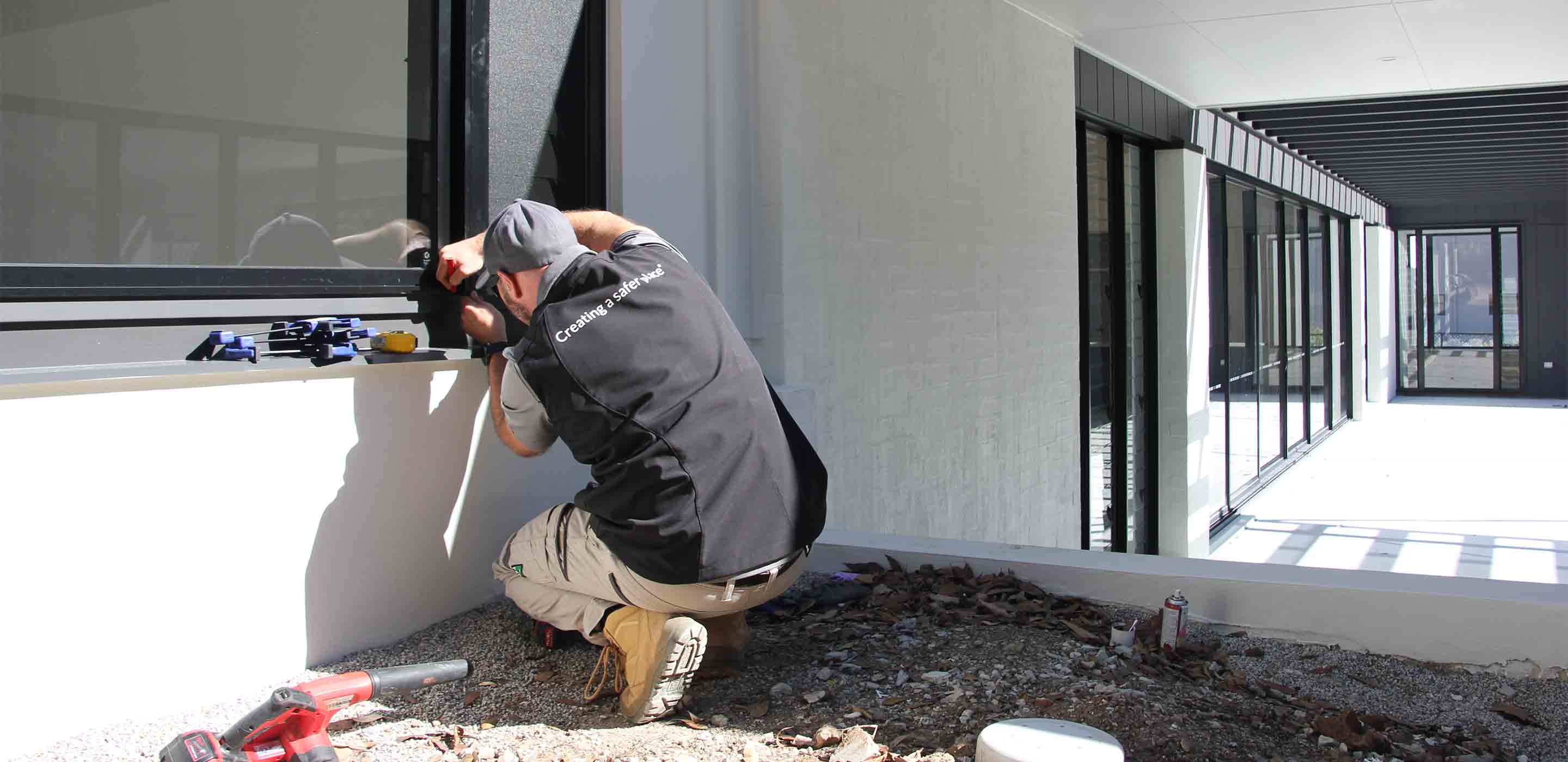
If you’re buying security screens, security doors, security screen doors or security window screens, you have a right that most consumers don’t know exists: the right to a compliance certificate. Here’s what it is, what it must include, and what it means if your installer can’t provide one.
What Are the Australian Standards for Security Screens and Security Doors?
In Australia, security screens, security screen doors and security window screens are governed by a three-part Australian Standard: AS5039. Understanding how it works is the first step to knowing whether your installation is genuinely protecting you.
AS5039.1 — Product Performance
AS5039.1 sets out the performance requirements for the products themselves. To carry this certification, a security screen hinge door, sliding security door or security window screen must pass a series of rigorous tests — including impact tests, jemmy resistance tests, knife shear tests and more. If a product hasn’t been tested and certified to AS5039.1, it is not classified as a security product under Australian Standards, regardless of what it looks like or how it’s marketed.
AS5039.2 — Installation
AS5039.2 covers how certified security products must be installed. A product that meets AS5039.1 can still fail to protect you if it isn’t installed correctly. The installation standard ensures the product performs as intended — that it fits correctly, is anchored properly, and can’t be defeated through the frame or fixings.
Both standards work together. You need the right product and the right installation. If either is missing, you don’t have a compliant installation.


Your Right to a Compliance Certificate
Here is something most homeowners and business owners don’t know: when security doors or security window screens are installed to Australian Standards, the installer is required to keep an installation record — and you are entitled to receive it.
The exact wording from the Australian Standard is:
“The installation records should be made available to the property owner upon request.”
This is not a courtesy. It is part of the Standard. Records exist and belong to you if your security screen doors or security window screens were installed to AS5039.2.
Your compliance certificate is your written proof that the work was done correctly, by a qualified installer, using a certified product. Think of it the way you’d think of a certificate of electrical compliance after an electrician completes work in your home — it’s the formal record that the job meets the required standard.
Your compliance certificate is your proof of a compliant install – Ask for it at the time of quoting — before you commit to any installer. Every COMPLIANT installer will say yes without hesitation.
What Must Be Recorded on Your Compliance Certificate?
Under AS5039.2, the installer’s installation record must include seven specific pieces of information. All seven must be present for the record to be complete and compliant:
| Required Item | What This Means | |
| 1 | Installation address | The property where the security screens or security doors were installed. |
| 2 | Date of installation | When the work was completed. |
| 3 | Name of installer | The individual who carried out the installation. |
| 4 | Registered business name | The licensed business responsible for the installation. |
| 5 | Licence number | The installer’s relevant trade licence number. |
| 6 | Declaration — product conforms to AS5039.1 | Confirmation the security screen, door or window screen meets the product standard. |
| 7 | Declaration — installation conforms to AS5039.2 | Confirmation the installation itself was completed correctly to the installation standard. |
A certificate that is missing any of these elements is not a complete record. If your installer hands you something that doesn’t cover all seven points, ask them to complete it properly.
Two Compliance Labels — What to Look for on the Product Itself
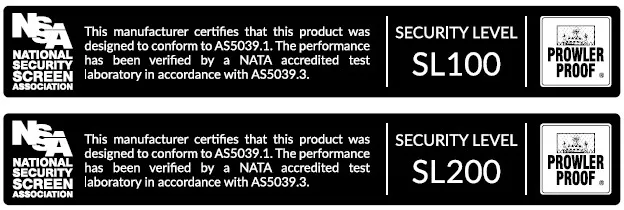
In addition to your certificate, a fully compliant installation of security screens, security screen doors or security window screens should result in two compliance labels being affixed to the installed product:
• Label 1: AS5039.1 Product Compliance Label — confirms the product has been independently tested and meets the performance requirements of the product standard. This is applied by the manufacturer and should already be on the product.
• Label 2: AS5039.2 Installation Compliance Label — applied by the installer at the time of installation. This label confirms the product was installed correctly to the installation standard and typically includes key details such as the installer’s name or business and the date.
Both labels should be visible on your installed security screen door, hinged security door, sliding security door or security window screen. Ask your installer to explain why the sticker is missing if you can’t locate it.
If Your Installer Cannot Provide a Compliance Certificate, the Installation Is Not Compliant
If your installer cannot produce a compliance certificate containing all seven required elements, the installation does not meet Australian Standard AS5039.2. That is not a technicality — it is a meaningful distinction.
An installation that does not meet AS5039.2 may not be correctly fitted. The fixings may not be adequate. The product may not be seated and anchored in the way the manufacturer’s specifications and the Standard require. In short, you may not be getting the protection you paid for.
Security screen doors, security screens and security window screens are purchased specifically to protect the people and property inside your home or business. An installation that cannot be verified as compliant undermines that purpose.
If you receive quotes from multiple installers and only some can offer a compliance certificate, that difference should weigh heavily in your decision.
No certificate = not compliant.
An installer who cannot provide a compliance certificate with all seven required elements has not completed the installation to Australian Standards. This is not optional — it is part of AS5039.2.

Ask These Two Questions Before You Sign Any Quote
The best time to ask about compliance is at the quoting stage — before you make a commitment. Put these two questions to every installer you invite to quote on your security screens, security doors or security window screens:
Question 1: “Will the products be labelled with both AS5039 compliance labels?”
Any installer operating to Australian Standards will immediately understand this question and answer yes. If you get a vague response, or the installer doesn’t know what the labels are, treat that as important information.
Question 2: “Can you provide me with my compliance certificate after installation?”
Again, any compliant installer will say yes. This is not an unusual or unreasonable request — it is your right under the Standard. Hesitation, pushback or confusion in response to this question is a red flag.
Your compliance certificate is your proof. It’s the document that confirms the security screen doors, security screens or security window screens protecting your property were installed correctly, by a licensed professional, to an independently verified standard.
All Prowler Proof Dealers Can Provide Your Compliance Certificate
Every authorised Prowler Proof dealer is trained and equipped to provide their customers with a compliance certificate upon request. This is not an extra or a premium — it is a standard part of every Prowler Proof installation.
Prowler Proof security screens, security screen doors and security window screens are manufactured and tested to meet Australian Standard AS5039.1. Every authorised Prowler Proof dealer installs to AS5039.2. And every Prowler Proof customer is entitled to receive their compliance certificate on request.
When you choose an authorised Prowler Proof dealer, you are choosing a business that can look you in the eye and hand you the paperwork to prove it.
To find your nearest authorised Prowler Proof dealer, visit our Get a Quote.
Frequently Asked Questions
A compliance certificate is a formal installation record required under Australian Standard AS5039.2. It must include the installation address, date of installation, installer name, registered business name, licence number, and two declarations — one confirming the product meets AS5039.1 (the product standard) and one confirming the installation meets AS5039.2 (the installation standard). Every consumer who has security screens, security doors or security window screens installed to Australian Standards is entitled to receive this certificate on request.
Yes. Australian Standard AS5039.2 states: “The installation records should be made available to the property owner upon request.” This applies to all security screen doors, security doors and security window screens installed to Australian Standards. You are entitled to ask for your certificate at any time — before installation, immediately after, or at a later date.
AS5039 is the Australian Standard covering security screen doors and security window screens. It has two parts: AS5039.1, which sets the performance requirements for the products themselves (impact resistance, jemmy resistance, knife shear and more), and AS5039.2, which sets out how compliant products must be installed. Both parts must be satisfied for an installation to be considered fully compliant.
If your installer cannot provide a compliance certificate containing all seven required elements, the installation does not comply with Australian Standard AS5039.2. This is not a minor issue — it may indicate the product used, the installation method, or both do not meet the required standard, which could affect the level of security protection your screens or doors actually provide.
The first label confirms the product meets AS5039.1 (the product performance standard) and is applied by the manufacturer. The second confirms the installation meets AS5039.2 and is applied by the installer at the time of the installation. Both labels should be visible on your installed security screen door, security window screen or security door. If either is missing, ask your installer to explain.
Ask at the quoting stage, before you commit to any installer. Ask two questions: “Will the products be labelled with both AS5039 compliance labels?” and “Can you provide me with a compliance certificate after installation?” A compliant, professional installer will answer yes to both without hesitation.
Yes. Every authorised Prowler Proof dealer can provide their customers with a compliance certificate upon request. It is a standard part of every Prowler Proof installation, not an optional extra.
Yes. If the installation was completed to Australian Standards, the installer is required to have kept those records. You can request them from the original installer at any time. If the installer cannot produce a complete record, this raises legitimate questions about whether the original installation was compliant.
Yes. AS5039.1 and AS5039.2 apply to security screen doors, hinged security doors, sliding security doors and security window screens — any product installed to provide a certified security barrier. The compliance certificate requirement applies to all of them.
Regular fly screens are designed to keep insects out. Security screens are specifically designed and tested to resist forced entry. It must pass impact tests, jemmy resistance tests and knife shear tests to be classified as a security product under AS5039.1. Security screens use stronger mesh (typically stainless steel or aluminium), stronger frames, and reinforced fixings. Only products certified to AS5039.1 are genuine security screens. If you’re unsure whether your screens are genuine security products, ask your installer for the product’s AS5039.1 certification.
Look for authorised dealers of Australian Standards-compliant products. Prowler Proof maintains a network of authorised dealers across Australia, all trained to install to AS5039.2 and all able to provide compliance certificates. You can find your nearest dealer at prowlerproof.com.au/find-a-dealer.