




When people think about home security, they often think about cameras, alarms, or even getting a dog. But one of the most common recommendations from police and crime prevention officers is much simpler:


Lock your doors — even when you’re home.
Unfortunately, many Australian homeowners still leave front and back doors unlocked during the day, especially when they’re home relaxing, cooking dinner, or trying to let fresh air through the house. Opportunistic burglars know this, and they regularly target homes with unlocked or poorly secured doors.
That’s why properly installed security screens have become one of the most practical ways to improve home security while still allowing airflow and ventilation.
At Prowler Proof, we regularly speak with homeowners who believe all security screens are the same. In reality, there’s a massive difference between a genuine compliant security screen and a cheap barrier door sold as “security”.
And that difference matters when someone tries to break in.
The Biggest Mistake Homeowners Make
One of the most common mistakes we see is people buying a non-compliant screen door believing they’ve purchased a real security screen.
In many cases, what they actually have is a basic barrier door.
Barrier doors may keep insects out and create the appearance of security, but they are not designed to withstand serious attack. When homeowners discover the difference is often the worst possible time — during an attempted break-in.
Another major issue is people purchasing off-the-shelf “security doors” from hardware stores and installing them themselves. Security screens need to be custom measured and manufactured specifically for each opening to ensure gaps and installation meet Australian Standards requirements.
A poorly fitted door can compromise the entire system.
What Police and Security Experts Consistently Recommend
While every property is different, there are several security principles police consistently reinforce:
1. Lock Your Doors — Even When Home
This is one of the biggest recommendations people ignore.
Many break-ins are opportunistic. Criminals often test doors looking for easy access. If a homeowner leaves their main door open for airflow, an unlocked screen door can become an easy target.
A properly installed security screen allows homeowners to:
- keep doors locked,
- maintain airflow,
- improve visibility,
- and still secure the home while occupied.
2. Make Your Home Harder to Enter
Most intruders are looking for the easiest opportunity.
The longer a door resists attack, the more likely the offender is to give up, attract attention, or move on.
That’s why compliant security screen systems matter.
3. Use Properly Tested Security Screens
Not all products marketed as “security” are equal.
A genuine security screen should comply with relevant Australian Standards and use components that match the exact tested bill of materials.
Unfortunately, some companies use cheaper or counterfeit components to reduce costs while still implying the product is compliant.
If it doesn’t match the tested system, compliance does not apply.

The Difference Between a Security Screen and a Barrier Door
This is where many homeowners get caught out.
Terms like:
- “safety door”
- “barrier door”
- “security-style door”
can create confusion.
A true security screen is designed and tested to resist forced entry. A barrier door generally is not.
One of the biggest myths in the industry is that all mesh is equally strong.
It isn’t.
The industry’s Dual Directional Knife Shear Testing Code of Practice exists specifically because different mesh systems perform very differently under attack.
There is also a major difference between lock systems.
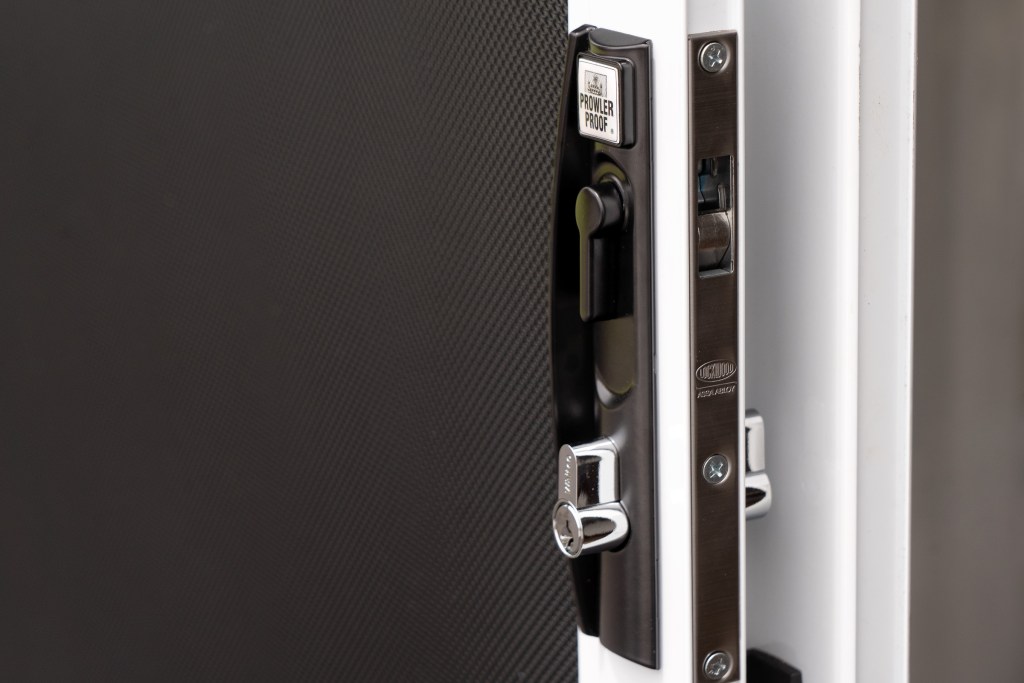
Single Point Locks vs Triple Point Locks
Single point locks are far easier to pry open under pressure.
That’s why triple point locking systems are critical for genuine security doors. They secure the door at multiple points, making it significantly harder for intruders to force the door from position.
If someone tells you a single point lock is “good enough” for a security door, that should raise serious concerns.
Real-World Example: When Security Screens Matter Most
Recently, a terrifying home invasion featured on Australian television news showed armed teenagers attempting to break into a family home using machetes.
The family’s Prowler Proof Protec security doors prevented the offenders from gaining entry.
This is exactly why compliant security matters.
When homeowners purchase genuine security products, they’re not just buying mesh and aluminium. They’re investing in time, resistance, and protection during a real emergency.
On the other hand, we regularly see examples of non-compliant diamond grille doors having their grille sections ripped out during attacks.
Appearance alone does not equal security.
Why Cameras Aren’t Enough
Another misconception we hear constantly is:
“I’ve got cameras, so I’m covered.”
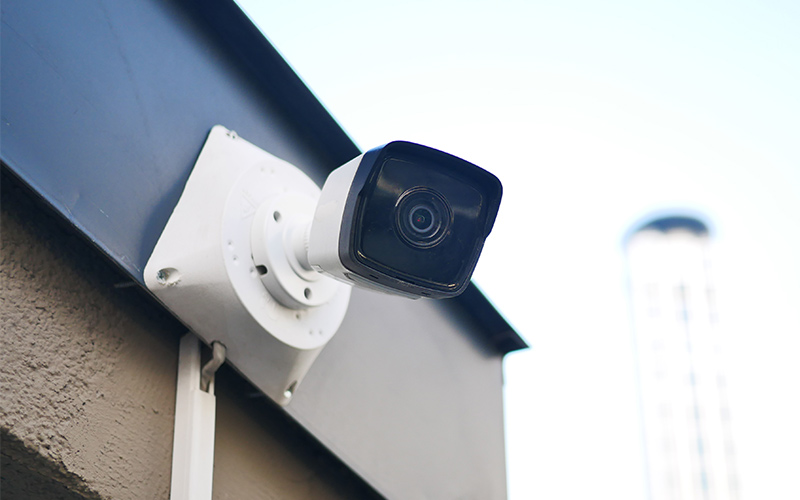
Cameras are useful. They help record events and may assist police afterward.
But cameras generally do not physically prevent entry.
The same applies to relying solely on dogs or alarm systems.
Good security works in layers:
- physical barriers,
- locks,
- visibility,
- habits,
- lighting,
- alarms,
- and surveillance.
But your doors remain one of the most important physical lines of defence.
Warning Signs to Watch For When Buying Security Screens
If you’re shopping for a security door or screen, here are some major red flags to watch for:
Missing Compliance Labels
A genuine compliant product should carry a manufacturer compliance label.
If someone claims the product is compliant but there’s no label, ask why.
No Installation Compliance Documentation
Installers should also provide:
- an installation compliance label,
- and a compliance certificate.
Use of “Barrier Door” or “Safety Door” Terminology
These are not necessarily security doors.
Single Point Locks
Proper security doors should use triple point locking systems.
Cheap Pricing That Seems Too Good to Be True
There can be major differences in price because there can be major differences in materials, testing, hardware, and installation quality.
Non-Association Installers
Look for installers who are members of the National Security Screen Association (NSSA).
Counterfeit or Substitute Components
Some suppliers substitute cheaper components that do not match the tested bill of materials used during Australian Standards testing.
That can compromise compliance and performance.
A Simple Homeowner Checklist Before Buying
Before purchasing any security screen or door, ask these questions:
- Is the installer licensed?
- Is the installer a member of the National Security Screen Association (NSSA)?
- Does the product have a manufacturer compliance label?
- Will the installer provide an installation compliance label and certificate?
- Is the mesh genuine and independently tested to dual directional knife shear testing requirements?
- Does the system use triple point locks?
- Is the product custom measured and made for my opening?
- Does the installed system match the tested bill of materials?
If the answer to any of these questions is unclear, keep asking.
Because when it comes to protecting your family, compliance and quality matter.
Final Thoughts
Police recommendations around home security are often surprisingly simple:
- lock your doors,
- remove easy opportunities,
- and use proper physical barriers.
But not all “security” products deliver the same protection.
A genuine compliant security screen gives homeowners something incredibly valuable:
- security,
- airflow,
- visibility,
- and peace of mind.
And when a real incident occurs, that difference can matter more than people realise.