




Understanding Security Screens
What Are Security Screens and How Do They Work?
Security screens are purpose-built barriers fitted to windows and doors to provide a physical layer of protection against forced entry. Unlike standard insect screens, they’re engineered to resist cutting, impact, and levering — the three most common methods burglars use to breach a home.
Most high-quality security screens are made from marine-grade stainless steel mesh or heavy-duty aluminium, secured within a robust aluminium frame. The mesh is locked into the frame using a system designed to prevent it from being pushed out, pulled out, or cut away. The result is a screen that lets in fresh air and natural light while acting as a genuine deterrent and physical barrier.
In Australia, security screens must meet the requirements of Australian Standard AS 5039, which tests screens against knife shear, impact, and jemmy (levering) attacks. When you choose a compliant product, you can trust it has been independently tested to withstand real-world force.
Security Screens vs Flyscreens: What’s the Difference?
It’s a common misconception that any screen on a window provides security. Standard flyscreens and security screens may look similar at a glance, but they serve entirely different purposes.
Flyscreens are made from fine fibreglass or thin aluminium gauze. They’re designed purely to keep insects out. They offer no resistance to forced entry — a determined intruder can push through or cut a flyscreen in seconds with minimal effort.
Security screens, by contrast, are engineered for strength. The mesh is far heavier gauge, the frames are stronger and deeper, and the way the mesh is fixed into the frame is designed specifically to prevent removal under force. A compliant security screen from a reputable manufacturer like Prowler Proof will resist the attacks required by AS 5039 — something no flyscreen can claim.
The takeaway: if security is your goal, a flyscreen simply isn’t the right tool. Investing in a certified security screen gives you genuine peace of mind, not just the appearance of it.

Preparation for Installation
Essential Steps to Prepare Your Home
A smooth installation day starts well before the installer arrives. Here’s how to prepare:
Clear the work area. Remove furniture, pot plants, and any items sitting near or against the windows and doors being fitted. Installers need unobstructed access both inside and outside your home.
Ensure access to all areas. If you have side gates, locked outbuildings, or fenced areas where screens are being fitted, make sure you can provide access on the day.
Check for existing frame damage. If your existing frames have corrosion, rot, or structural damage, flag this with your installer before the day. In some cases, repairs may need to happen before screens can be fitted correctly.
Consider any pets or young children. It can be easier to arrange for pets or small children to be in a separate area of the home while work is underway.
The Installation Process
How Long Does Installation Take?
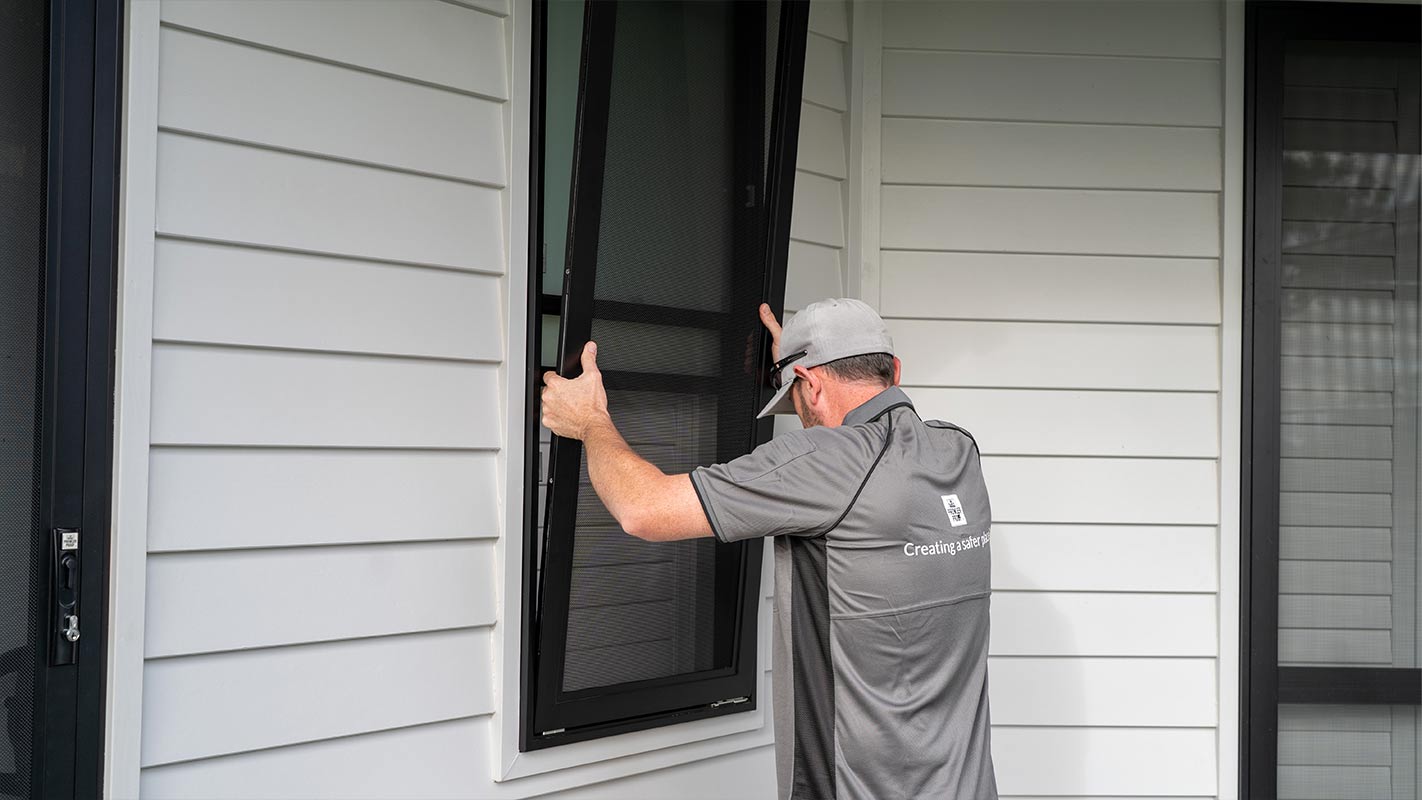
Installation time varies depending on the number of screens being fitted and the complexity of your openings, but as a general guide, a typical residential installation covering several windows and one or two doors will take anywhere from a few hours to a full day.
Your installer will give you a more accurate timeframe when they provide your quote, based on your specific job. It’s worth planning to be home for the duration. Avoid scheduling other tradespeople or deliveries on the same day to keep the process as smooth as possible.
What to Ask Your Installer on the Day
Getting the most from your security screens starts with understanding how to use them correctly. On installation day, don’t hesitate to ask your installer the following:
How do I operate the locks correctly? Security screen locks are more robust than standard screen door locks. Make sure you understand the proper locking and unlocking action to avoid unnecessary wear.
Are there any restrictions on how the screen opens or closes? Some screens have specific operation requirements — for example, sliding doors should always be slid smoothly along the track rather than lifted or forced.
What should I do if the screen seems stiff or misaligned? Knowing the difference between normal resistance and a fitting issue means you can act quickly if something isn’t right after installation.
What should I avoid using to clean the mesh? Certain cleaning products can damage mesh coatings or frame finishes. Get clear guidance from your installer upfront.
How do I report a problem if one arises? Make sure you have your installer’s contact details and understand the process for raising a warranty or service issue.

Compliance Labelling: What Should Be Attached During Installation
A critical part of a proper security screen installation is compliance labelling. Under Australian Standard AS 5039, every compliant security screen product must have two labels to confirm it has been tested and certified, and installed correctly.
The security screen manufacturer will attach the manufacturing compliance label, in the factory. This label confirms the product was manufactured in compliance with AS 5039.1, and the screen has passed the testing specificed in AS 5039.3.
Your installer should attach another label to each screen on the day — typically on the frame. This is your confirmation that the screen has been installed as per AS 5039.2.
Compliance labelling is your assurance that what’s been installed is a genuine, tested security product — not a standard screen door being passed off as one. If you’re ever in doubt, ask your installer to show you the product compliance documentation before they leave.
You can also request your compliance certificate from your installer.
Post-Installation Care and Maintenance
How to Properly Maintain Your Security Screens
Security screens are built tough, but regular maintenance keeps them performing at their best and looking great for years. The good news is that upkeep is straightforward.
Clean the mesh regularly. Depending on your environment, aim to clean the mesh as per our cleaning schedule. Use a soft brush or vacuum to remove loose dust and debris, then wipe down with a damp cloth and mild detergent. Rinse with clean water and allow to dry. Avoid harsh chemicals, bleach, or abrasive scrubbing pads, which can damage the mesh coating.
Clean the tracks. For sliding doors, keep the track clear of dirt and debris — a build-up here can cause the door to drag and wear the frame over time. Wipe tracks clean regularly.
Inspect the mesh for damage. Periodically check the mesh for any signs of damage — cuts, dents, or build up. Early detection means small issues can be addressed before they compromise the screen’s integrity.
Check locks and handles. Test the operation of locks and handles. If anything feels loose, stiff, or out of alignment, contact your installer to have it inspected.
Rinse salt residue promptly in coastal areas. If you live near the coast, salt air accelerates corrosion. Rinse your screens with fresh water more frequently — ideally monthly — to remove salt deposits and protect the mesh and frames.


Your Warranty Card: What to Do With It
When your Prowler Proof screens are installed, you should receive a warranty card. Safely store this card. This is important because, in the event that you need to make a warranty claim, having your warranty card means the process is faster and simpler.
The Prowler Proof Warranty
Prowler Proof stands behind the quality of its products with a comprehensive warranty. Prowler Proof security screens and doors are backed by a 10-year full replacement warranty, giving you confidence that your investment is protected for the long term.
The warranty covers defects in materials and workmanship under normal use. To maintain your warranty, it’s important to follow the recommended care and maintenance guidelines, use your screens as intended, and ensure any service or repair work is carried out by a qualified installer.
For full warranty terms and conditions, refer to the documentation provided with your installation or speak with your local Prowler Proof dealer.
Security screens are a long-term investment in your home’s safety and liveability. By choosing a compliant product, working with a qualified installer, and keeping up with simple maintenance, you’ll enjoy the benefits — fresh air, natural light, and genuine peace of mind — for many years to come.
Ready to get started? Find your local Prowler Proof dealer at prowlerproof.com.au to book a free measure and quote.