




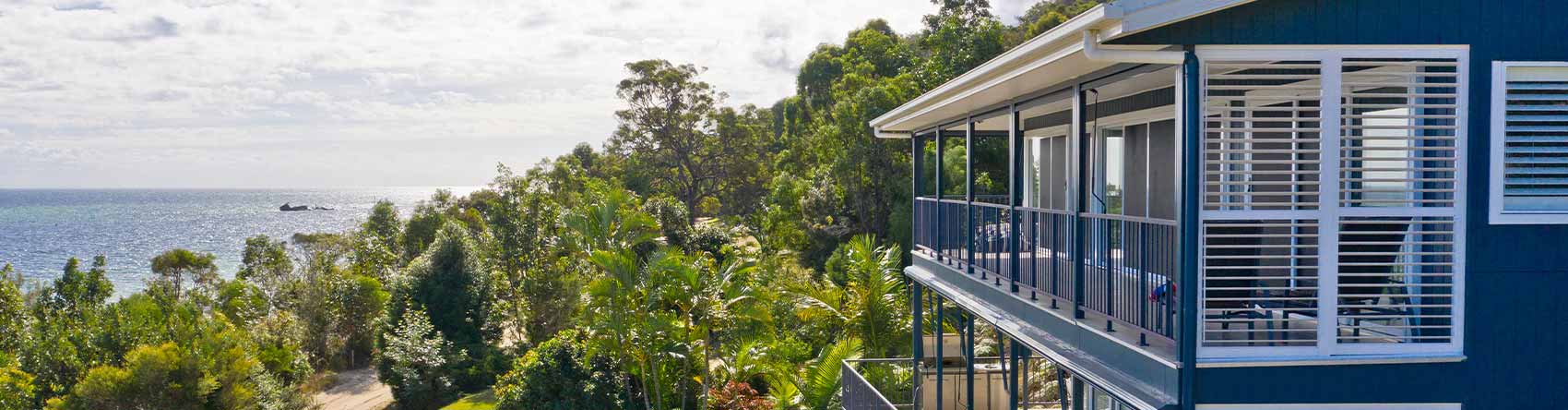
If you live near the coast, you know that salt air can be tough on your home.
From outdoor furniture and fittings to cars and metal fixtures, coastal environments can accelerate corrosion. So, when you’re investing in a security door, it’s natural to ask: are security doors corrosion resistant?
The short answer is yes — but the level of corrosion resistance can vary significantly between products.
For coastal homes, it’s worth looking beyond a simple claim that a security door is “corrosion resistant”. The real question is: how has it been tested, and does the complete security screen stand up to those tests?
That’s where Prowler Proof Protec stands apart.
Why does coastal air cause corrosion?
Coastal environments expose your security door to salt and moisture, which can accelerate the corrosion of metal components.
Over time, corrosion can affect the appearance and performance of a security screen. This is particularly important for coastal homeowners, because your security door is exposed to the elements every day.
That’s why choosing a security screen designed and tested for corrosion resistance can make a significant difference.

Are all security doors corrosion resistant?
Not necessarily.
While many security doors may use corrosion-resistant materials or protective coatings, there’s an important distinction between testing an individual component and testing the complete security screen.
A security door isn’t made from just one material. It can include the frame, mesh or infill, joins, fasteners, coatings and other components. Each of these can contribute to the product’s long-term corrosion performance.
For this reason, it’s important to look at testing of the finished security screen rather than relying solely on the specifications of the mesh or coating.
How is corrosion resistance tested?
One of the key tests used to assess corrosion resistance is a neutral salt spray test.
This is an accelerated corrosion test carried out inside an enclosed chamber. The product is exposed to a salt spray at approximately 35°C and almost 100% humidity. The salt concentration is higher than seawater, creating a demanding environment designed to accelerate corrosion.
Under AS 2331.3.1, the relevant test requires the product to withstand 1,000 hours of neutral salt spray.
And this is where Prowler Proof Protec has an important point of difference.

Protec goes beyond the required corrosion test
Prowler Proof Protec has passed the 1,000-hour neutral salt spray test, with the complete security screen being tested.
That’s significant because many manufacturers focus their corrosion testing on the mesh alone.
But Prowler Proof didn’t stop there.
Protec has also passed a 1,000-hour acetic acid salt spray test to AS 2331.3.2. This is an even more demanding test environment, with acetic acid added to the salt spray to create a highly corrosive atmosphere.
And Protec’s perforated aluminium mesh has survived a 10,000-hour neutral salt spray test.
In other words, Protec has been tested beyond the standard 1,000-hour neutral salt spray requirement, giving coastal homeowners additional evidence of its corrosion resistance.

Why does the construction of a security door matter?
Corrosion resistance isn’t only about the material used for the mesh. The way a security screen is constructed can also influence its long-term performance.
Prowler Proof uses a welded construction method rather than relying on screws or rivets to hold the frame together.
Why does that matter?
Whenever different metals come into contact, there can be a risk of corrosion. Reducing the number of mechanical fasteners and potential points of interaction is one way Prowler Proof has designed its products with corrosion resistance in mind.
Prowler Proof also conducts regular in-house powder coating quality checks as part of its manufacturing process, helping maintain the protective finish of its security screens.
Is Protec suitable for coastal homes?
Protec is designed to provide security, airflow and visibility while also delivering strong corrosion resistance.
Its perforated aluminium mesh is made from a solid 1.7 mm aluminium sheet with 2.0 mm holes and is thermally treated for increased strength and performance.
For homeowners living near the coast, the combination of its construction, protective finish and extensive corrosion testing makes Protec an option worth considering.
Of course, no security door should be described as completely “corrosion-proof”. Coastal environments can be demanding, and regular care and maintenance are still important.
The advantage of choosing a product with extensive corrosion testing is that you’re starting with a security screen that has already been put through an accelerated and highly demanding test environment.
How should you care for a security door near the coast?
Even a highly corrosion-resistant security screen benefits from regular cleaning.
Salt and other airborne contaminants can accumulate on the surface over time. Regularly washing your security screen with clean water and following the manufacturer’s recommended maintenance procedures can help keep it looking and performing its best.
For coastal properties, regular maintenance is particularly important because the environment continually exposes the screen to salt and moisture.

What should coastal homeowners look for in a security door?
If you’re comparing security doors for a coastal property, don’t just ask whether the product is “corrosion resistant”.
Ask:
- Has the complete security screen been corrosion tested?
- What standard was it tested against?
- How many hours did it withstand?
- Has it been tested beyond the minimum requirement?
- Has the mesh alone been tested, or the finished product?
- How is the frame constructed?
- What protective coating or finish is used?
- What maintenance does the manufacturer recommend?
These questions can help you compare products based on evidence rather than marketing claims.
Frequently Asked Questions
Yes. Prowler Proof Protec has passed the 1,000-hour neutral salt spray test required under AS 2331.3.1, as well as a 1,000-hour acetic acid salt spray test under AS 2331.3.2. Its perforated aluminium mesh has also survived a 10,000-hour neutral salt spray test.
Protec’s corrosion testing makes it a strong option for homes in coastal environments. However, the suitability of a particular security door can depend on the property’s location, exposure and installation requirements.
Both tests expose products to an accelerated corrosive environment. Acetic acid salt spray is more aggressive because the addition of acetic acid makes the environment significantly more acidic than a standard neutral salt spray test.
No product should be considered completely corrosion-proof. Testing provides evidence of how a product performs under a controlled, accelerated environment. Regular cleaning and maintenance remain important, particularly in coastal locations.
A security screen contains more than just its mesh. The frame, joins, fasteners and protective finish can all contribute to its overall corrosion performance. Testing the complete screen therefore provides a more meaningful indication of how the finished product performs.
Choosing a security door for your coastal home
Living by the coast doesn’t mean you have to compromise on home security.
It does mean that corrosion resistance should be an important consideration when choosing your security doors and screens.
Prowler Proof Protec has been put through rigorous corrosion testing — including tests that go beyond the standard 1,000-hour neutral salt spray requirement. With the complete screen passing both neutral and acetic acid salt spray tests, and its mesh surviving 10,000 hours of neutral salt spray, Protec has been designed with the demands of Australian conditions in mind.
If you’re unsure which security door is right for your coastal home, contact your local Prowler Proof dealer to discuss your requirements. The right product can depend on your home’s location, exposure, style and security needs, so it’s worth getting advice before you make your decision.